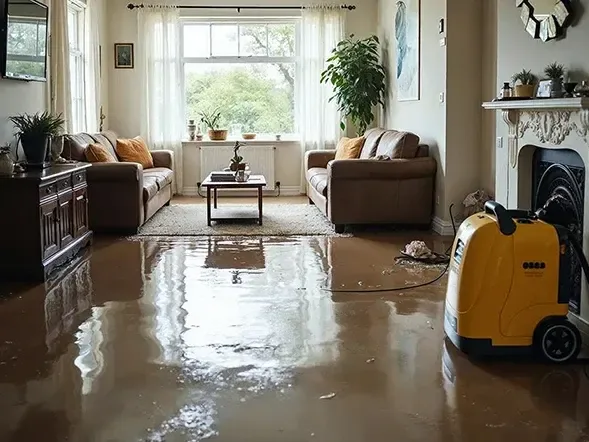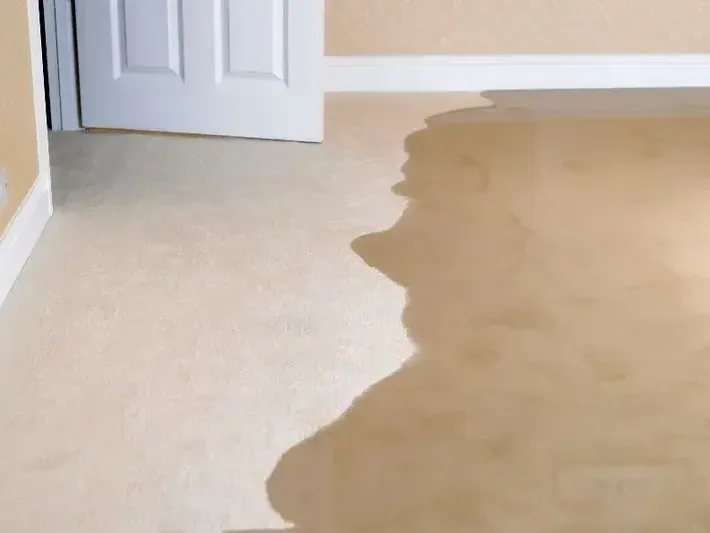
Foundation type varies from home to home, so a slab leak applies only where a house sits on concrete. When it does, the supply pipe may run inside or beneath the slab, and a pinhole can wet a floor for weeks before the first clue appears. Wet carpet and pad can be pulled with water extraction, and tile or wood floors are checked before anything is replaced.
Signs of water under the floor
Warm patches on tile, damp carpet at the edges, a rising water bill, the sound of running water with every tap closed and a musty smell near baseboards all point to a leak. A plumber confirms the source with detection equipment before the restoration crew starts.
How the slab gets dried
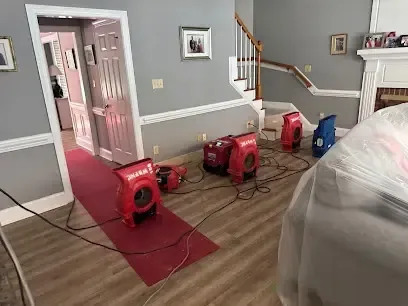
Concrete holds moisture for a long time. The team lifts wet carpet, pad or flooring, then lays panel mats that draw water up out of the slab while dehumidifiers pull it from the air. Readings from the concrete show when the surface is ready for new flooring. Wood trim, door jambs and cabinets near the wet zone are also checked, because moisture from a slab climbs into the lower parts of walls.