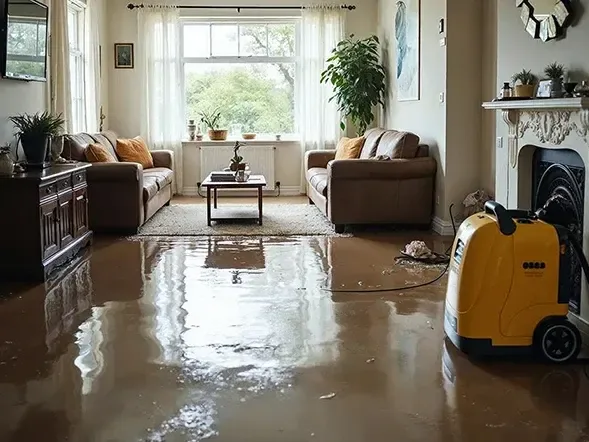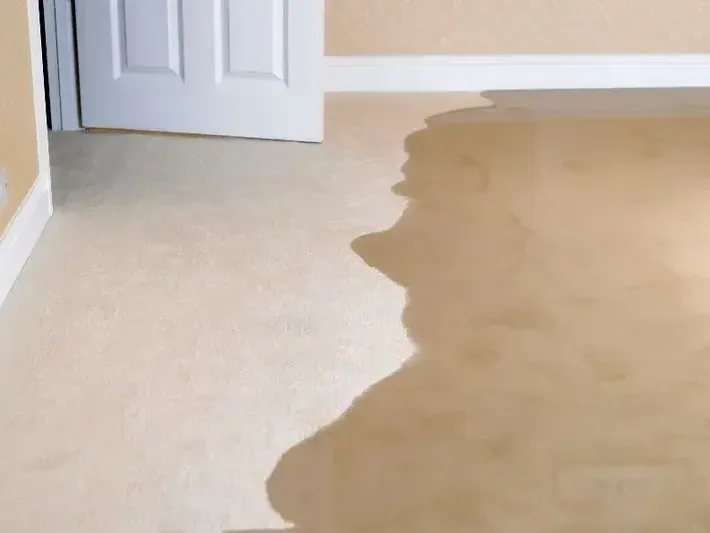
The largest share of local housing went up in the 1960s, much of it on concrete slabs with copper water pipe cast below. Decades of ground movement and water chemistry thin those pipes until one pinholes. The leak runs quietly under the floor, and the first sign is usually a damp carpet edge, a warm spot on the tile or a water bill that jumped.
Why slabs dry slowly
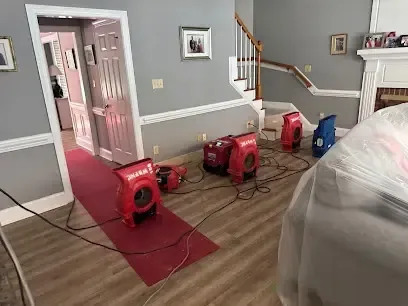
Concrete holds a lot of water and gives it up slowly. Surface readings can look fine a day after extraction while the slab below is still wet, and new flooring laid over that will cup, lift or debond. The crew tests the concrete itself and keeps drying until the readings match an unaffected area of the same slab.
Flooring over the leak
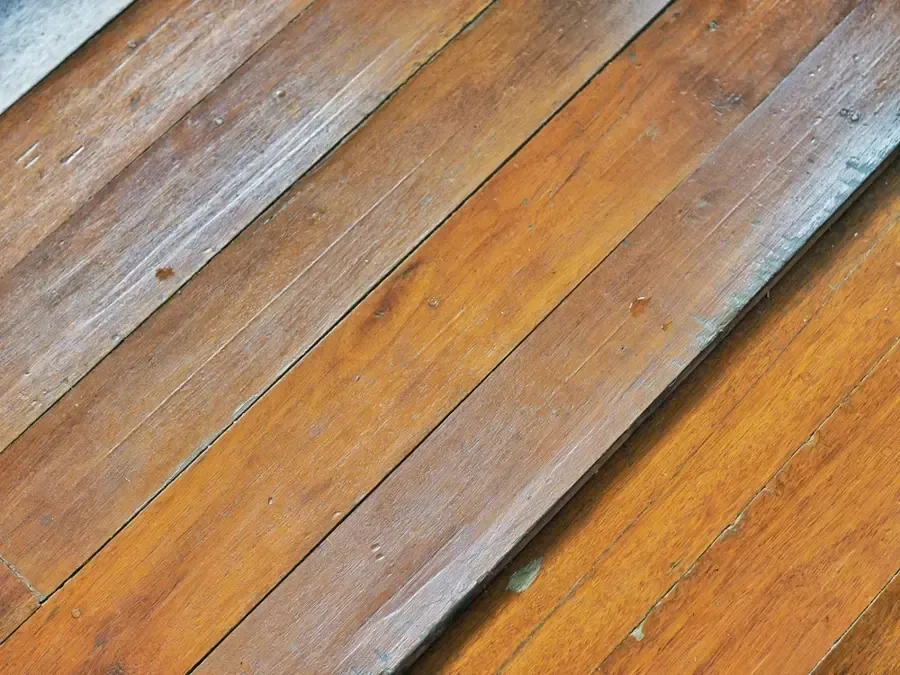
Carpet pad over a slab leak almost always comes out because it stays wet against the concrete. Tile can often stay if the grout dries. Floating laminate and engineered planks are lifted so drying mats can reach the slab. Baseboards along the wet zone come off to vent the bottom of the wall.