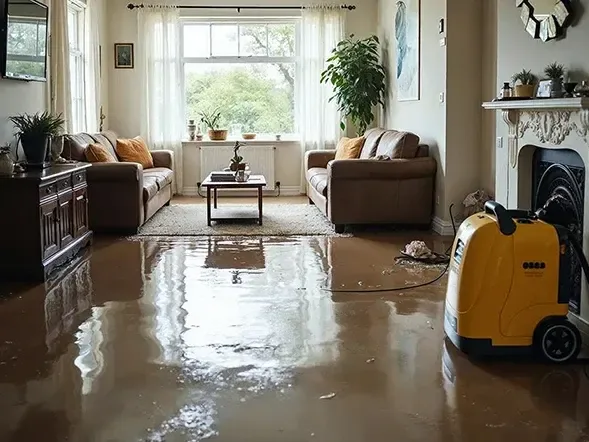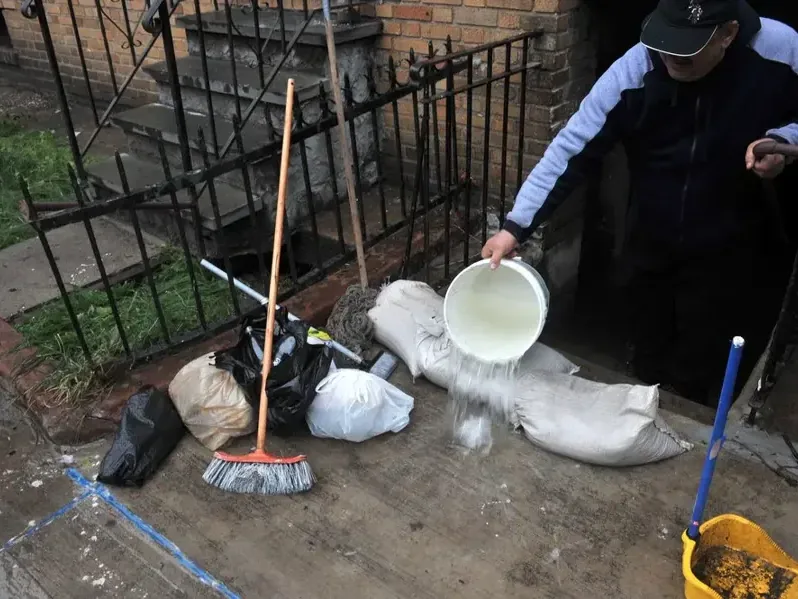
Sewage that comes up through a toilet, a tub or a floor drain carries bacteria and viruses, so it is never treated like a clean leak. The household should stay out of the area and keep children and pets away. Most local backups start in the private lateral between the house and the city main, where roots and grease build up over years.
Why porous materials go
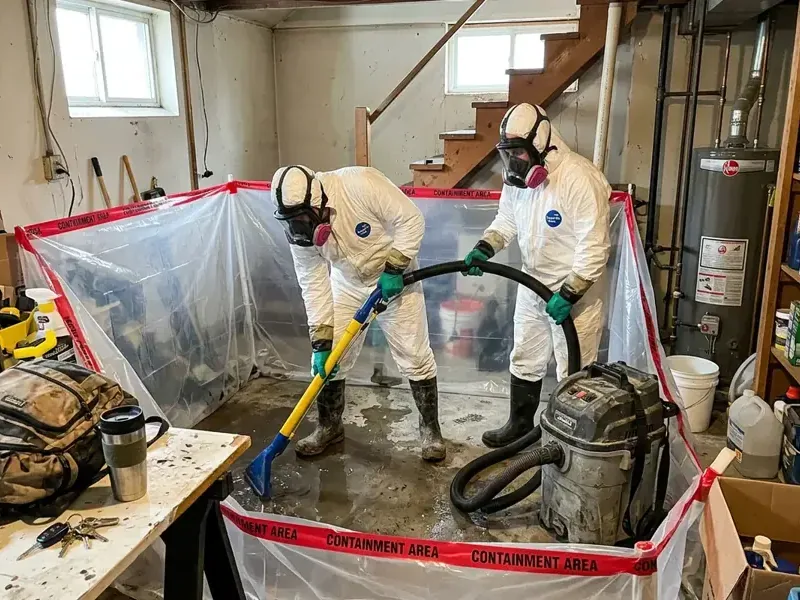
Carpet, pad, drywall, insulation and particleboard soak sewage into their core, and cleaning only reaches the surface. IICRC guidance treats them as unsalvageable once Category 3 water reaches them, so the crew removes everything porous above the waterline, bags it inside containment and hauls it out.
Clean, treat, then dry
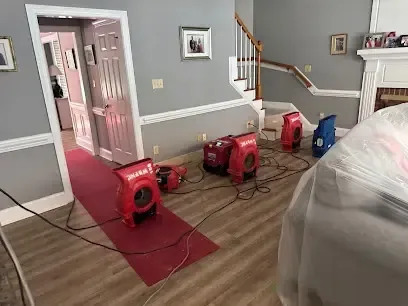
After removal, hard surfaces are cleaned with detergent and then treated with an EPA-registered antimicrobial left on for its labeled dwell time. Only then do air movers and dehumidifiers go in, because blowing air across untreated sewage spreads contamination. Readings continue until the framing and slab are dry.