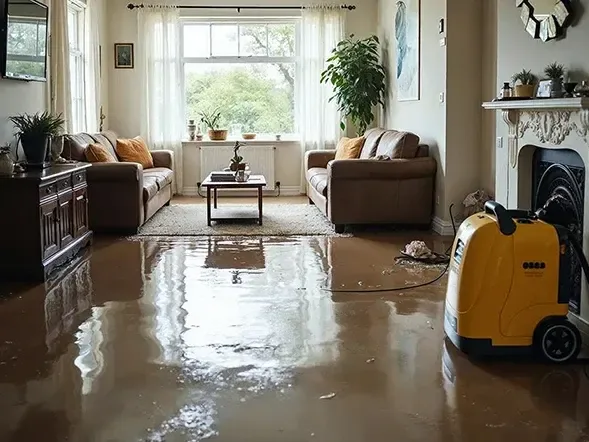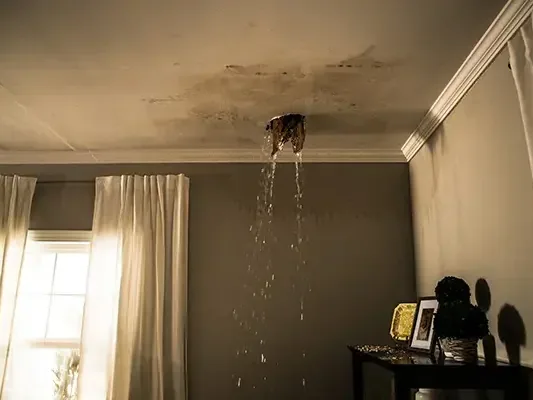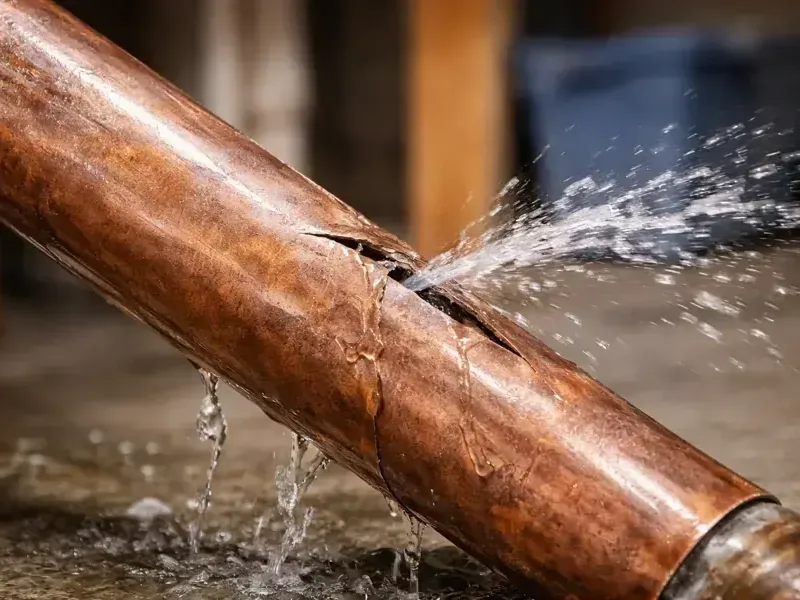
A burst supply pipe is pressurized water, so it does not drip, it floods. In older homes near downtown the pipe is often galvanized steel that has corroded from the inside; in 1960s tracts it is usually copper that has thinned at the fittings. Either way the water runs down inside the wall before it shows on the floor.
Water inside the wall
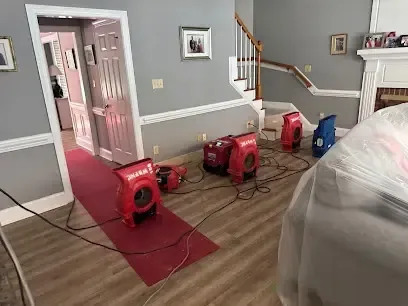
Drywall wicks water upward, and insulation holds it against the studs and the bottom plate. A thermal camera and a pin meter show how high the wet zone climbed. Where it went past what drywall can dry in place, the crew cuts a clean flood cut above the wet mark and pulls the wet insulation, then aims air into the open cavity.
Rare freezes, real breaks
Hard freezes are uncommon in the valley, but they happen: during the December 1990 freeze, county firefighters logged at least 30 calls about broken water pipes. Pipes in exterior walls, attics and garages are the ones that split, usually discovered when the thaw starts the flow again.