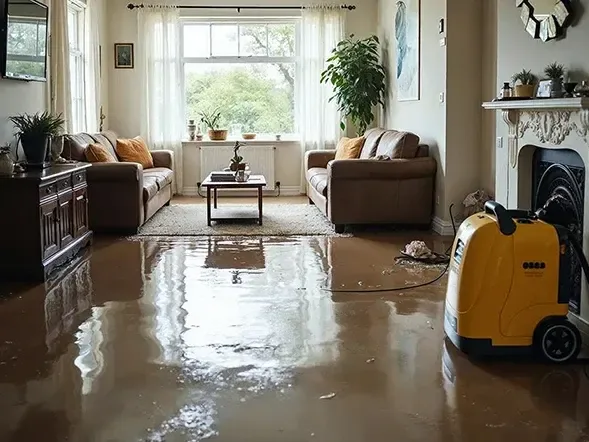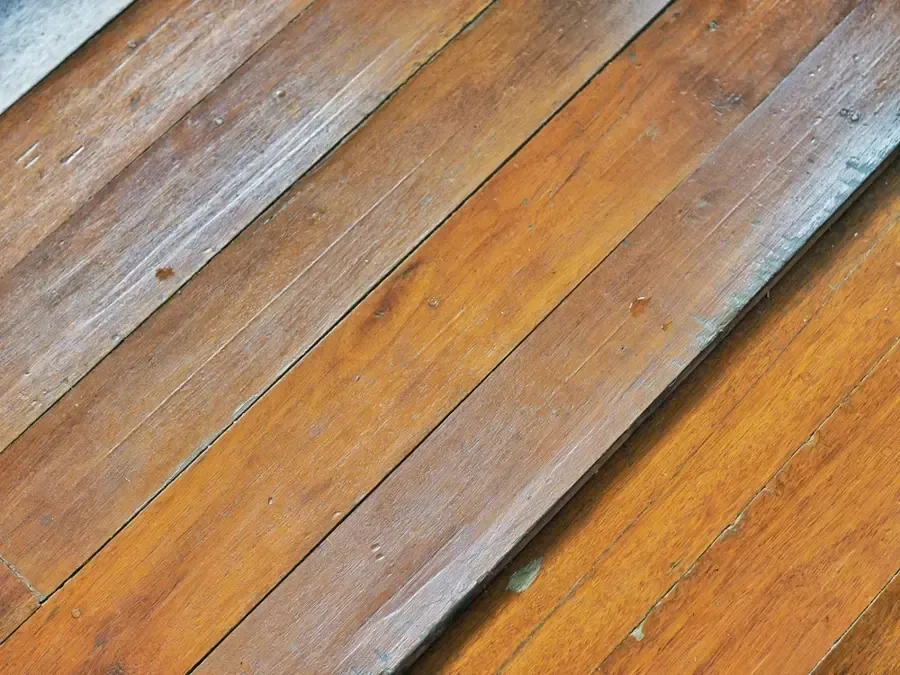
Wood absorbs water through its grain and from underneath. Even a thin film can wick into tongue and groove joints, and boards start to cup within a day or two, so quick drying is the best protection. Pulling standing water first, through water extraction, gives the boards the best chance of recovering.
Drying in place when possible
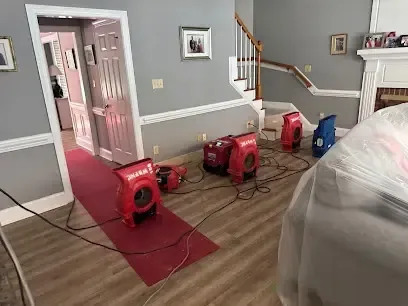
The crew sets mats that pull moisture from the board surface, adds dehumidifiers and controlled airflow and checks the moisture in the floor and the subfloor. Slow, controlled drying prevents the splitting that fast heat can cause. Mats work best on solid and engineered boards, and the crew adjusts the setup for each floor type and thickness.
When boards must come out
If boards have buckled, delaminated or stay wet after days of drying, they are removed so the subfloor can dry. Finish and sanding come later, after the wood settles to its normal moisture level, which may take weeks.