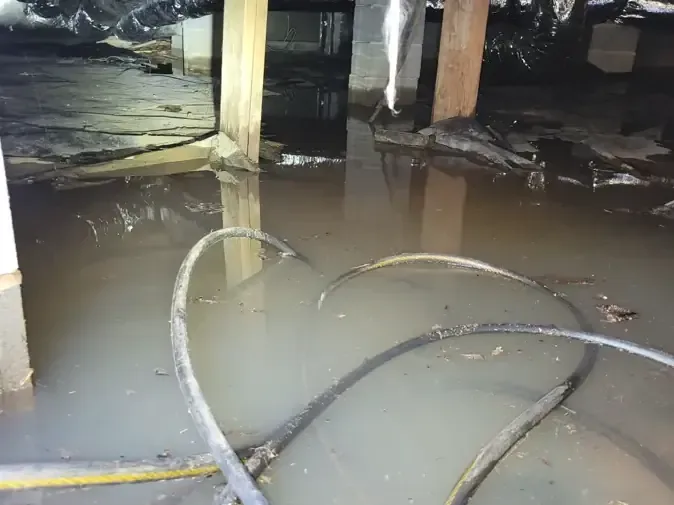
Water under a house does not go away by itself. It lingers in the soil and the insulation, raises humidity under the floor and gradually soaks the joists and subfloor. Getting it out, and drying the space properly, protects the floor above. The first question is always where the water came from.
What is under the floor
Crews check the vapor barrier, insulation batts, wiring and ductwork before pumping, because each reacts to water differently. Wet fiberglass insulation sags and loses its value, and a torn barrier lets ground moisture back in. They also note the water color, which hints at its source.
Pumping and drying a tight space
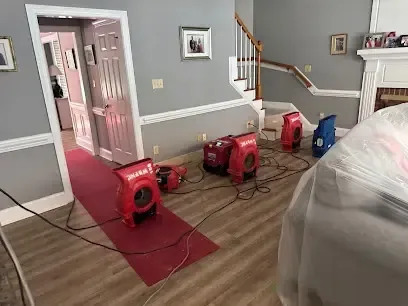
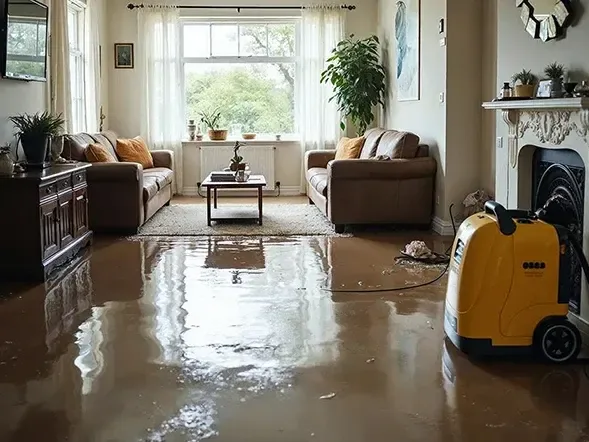
Submersible pumps clear the depth, then wet vacuums pick up the rest. Fans and a dehumidifier rated for confined spaces run until the joists, subfloor and soil surface read dry. Water from outside or from sewer sources needs different handling than a clean supply leak.