On February 22, 2024, Ojai Valley Sanitary District reported a sewage release of 35,000 gallons in Oak View. About 15,000 gallons reached a storm drain that flows to the Ventura River.
Key takeaways
- The February 22, 2024 release was reported by Ojai Valley Sanitary District; it was a public sewer release, not a backup in a house.
- A sewage backup inside a home is a separate event with its own cleanup.
- Sewage water is treated as the most contaminated category, so contact and cleanup need care.
- Porous materials that touched sewage are usually removed rather than dried.
- Which agency serves a given address should be confirmed with the district or the county.
What was reported in Oak View
Ojai Valley Sanitary District reported a 35,000 gallon sewage release in Oak View on February 22, 2024. About 15,000 gallons reached a storm drain that discharged into the Ventura River, and the damaged pipe was bypassed during the response.
That event shows how a break in a sewer pipe can send a large volume of untreated wastewater into places it should never reach.
A release of that size is noticed because it can reach a storm drain and flow on to a river. A backup inside a house is smaller in volume but much closer to the people living there.
Oak View is an unincorporated community and census-designated place in Ventura County, along the Ventura River in a narrow valley in the Ojai Valley.
The 2020 census counted 6,215 people there, and about 80.0% of occupied homes are owner-occupied, so most households deal with a backup as owners.
- The agency named in the report is Ojai Valley Sanitary District.
- The release reached a storm drain and the Ventura River.
- The damaged pipe was bypassed while crews responded.
A public release is not a home backup
A public release happens in a district pipe or a manhole. A backup happens when wastewater rises through a drain inside a house.
The causes differ, and so does who responds. The district handles its own pipes.
A home backup, though, becomes a cleanup job for the property owner.
Neither case should be ignored. A report in the news about a release is a prompt to check drains and keep fixtures in use to a minimum if the district asks for it.
One test helps: if the water is rising out of a drain, a tub or a toilet and not coming from a pipe overhead or an appliance, it is a sewer backup until a plumber says otherwise.
Signs of a backup inside the house
The first clue is usually gurgling drains, water rising in a tub or shower, or a toilet that will not flush and bubbles up.
- Floor drains that spill water
- Toilets that overflow with no clog
- Slow drains in several fixtures at once
- A sewage smell near a drain
Who is responsible
Responsibility for a private sewer pipe can be unclear. Do not assume.
Ask the sewer agency and a plumber which section of pipe belongs to whom.
Why sewage water is handled differently
Sewage carries bacteria and other pathogens. That makes it the most contaminated category of water damage.
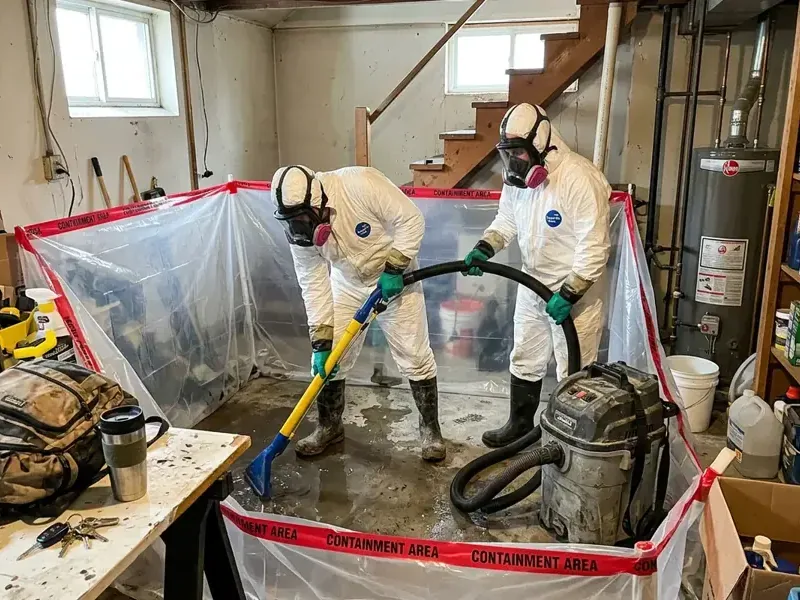
Crews wear protective gear and work under containment where needed. The aim is to remove the contaminated water and anything that absorbed it, then disinfect what is left.
Because sewage carries pathogens, gloves, boots and eye protection are the minimum for anyone in the area. Children, older adults and people with weak immune systems should stay away.
Cleaners are chosen to kill microbes without damaging surfaces, and the crew checks that the area is clean before drying starts.
What sanitary cleanup looks like
A sewage backup cleanup follows a set order so that contamination does not spread.
Items that cannot be cleaned are bagged and removed, with photos taken first for the claim record.
Hard surfaces like tile and sealed floors can usually be cleaned, but grout and unsealed concrete need a second look.
Porous contents such as upholstered furniture, mattresses and stuffed toys that touched sewage are normally discarded.
Walls need a closer look than floors. A crew often drills small holes or lifts baseboards to check the cavity, because sewage water can sit unseen inside it.
- Stop using plumbing fixtures so more wastewater does not enter.
- Extract the standing water with pumps and wet vacuums.
- Remove carpet, pad, insulation and wet drywall that cannot be cleaned.
- Clean and disinfect hard surfaces and framing.
- Dry the structure with air movers and dehumidifiers.
- Take final moisture readings before rebuilding starts.
Extraction and drying afterward
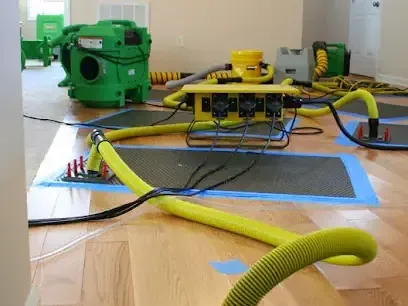
Once contaminated materials are out, the space still holds moisture. Water extraction takes out what remains, and drying finishes the job.
The local Oak View restoration team and its structural drying work follow the same order.
Skipping the final drying stage leaves damp framing behind new finishes, which brings odor and later damage.
Air movers push moist air into dehumidifiers. The crew watches readings in the framing and subfloor, and keeps equipment running until they match dry reference spots in the house.
Odor control comes last. Once the source materials are gone and the structure is dry, remaining smells are treated, not masked.
Protecting a home from backups
No homeowner can prevent a break in a public pipe, but a few habits lower the risk of a house backup.
If a backup keeps returning, a plumber can scope the private pipe to look for roots, breaks or a blockage. A repaired pipe and a restored room are two separate jobs and both need to be finished.
- Keep wipes, grease and paper towels out of drains and toilets.
- Know where the cleanout is, if the home has one.
- Do not use fixtures during a known sewer problem.
- Report a backup to the sewer agency right away.
Where Ventura River water fits in
The Ventura River is the water feature tied to this event, because storm drain discharge reached it. The river runs along the narrow valley where Oak View sits.
For homeowners, the lesson is practical. Storm drains lead to natural waterways, so nothing should be poured down them, and a household that sees sewage in a yard or street should report it to the sewer agency at once.
Casitas Springs lies to the south and Mira Monte to the north, and the same districts that handle water and sewer service in the area keep records of releases and repairs.
- Do not wade through sewage in a yard or street.
- Keep pets away from any pooled wastewater.
- Report the release to the sewer agency.
- Photograph standing water and the date.
Questions
Did the 2024 release flood homes in Oak View?
The report describes a release that reached a storm drain and the Ventura River. It does not say homes were flooded, and none is claimed here.
Who cleans up a sewage backup in a house?
A water damage restoration team handles extraction, removal and disinfection. The sewer agency handles its own pipes.
Is it safe to stay in a house after a sewage backup?
Not in the affected rooms. Stay out until contaminated materials are cleaned and removed, and keep children and pets away.
Can carpet be saved after sewage?
Usually not. Carpet and pad hold contaminated water, so they are normally removed.
How do I find out which agency serves my address?
Ask the sewer district or Ventura County. Ojai Valley Sanitary District reported the 2024 release, but service for a given address should be confirmed.
Can I clean up sewage myself?
Small spills on hard surfaces can be handled with protective gear and a disinfectant, but a backup that reaches carpet, walls or subfloors calls for a trained restoration team.