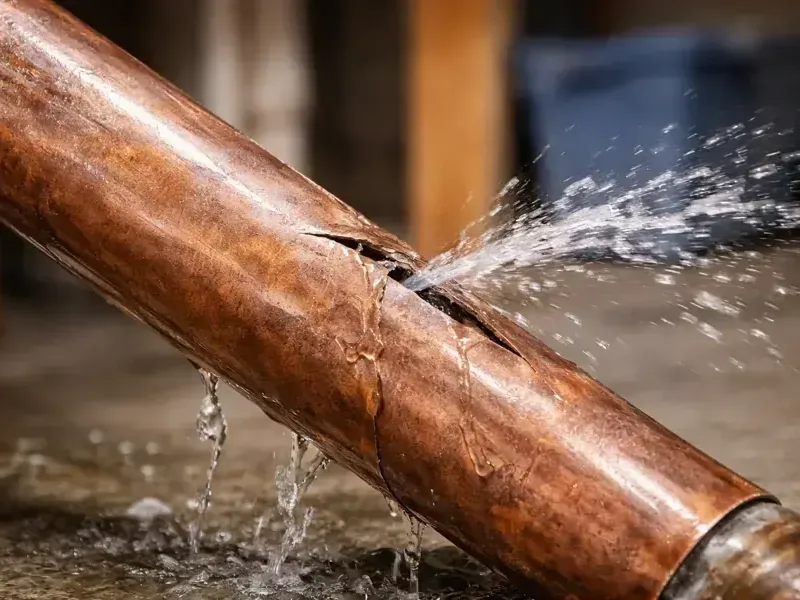
About 80.0% of occupied homes in Oak View are owner-occupied, so most burst pipe losses land on the owner. Knowing the first steps saves floors, cabinets and claim headaches.
Key takeaways
- Shut off the main water supply first; it stops the damage faster than any other step.
- Owners handle repairs and insurance claims directly, since about 80.0% of occupied Oak View homes are owner-occupied.
- The median owner-occupied home value is $819,100, which makes fast drying worth the effort.
- Photos and notes taken before cleanup support the claim.
- Extraction comes before drying, and drying should reach framing and subfloors, not just surfaces.
Why owners carry the load
Oak View is an unincorporated community in Ventura County. Census survey data for 2020 to 2024 shows about 80.0% of occupied homes are owner-occupied.
In 2010, 71.5% were owner-occupied and 28.5% were rented.
For an owner, a burst pipe means acting as the property manager, the claimant and the one who pays any deductible. That is a lot at once, so a clear order helps.
The local restoration team works from the same list.
Owners also tend to stay in the house during repairs, which means safe access, temporary water use and dust control all matter.
- Stop the water.
- Make the house safe.
- Record the damage.
- Call the insurer.
- Start extraction and drying.
What owners should expect
Owners usually hire the plumber, the restoration team and the repair crew, and coordinate with the insurer. Doing so in a sensible order cuts both cost and stress.
The restoration team often starts first, since extraction and drying cannot wait. The repair crew follows once the readings show dry materials.
- Plumber stops the leak and repairs the pipe.
- Restoration team extracts water and dries.
- Repair crew replaces drywall, flooring and trim.
- The insurer reviews and pays the claim according to the policy.
The first five minutes
Water from a burst supply pipe can move gallons in a short time. The main shutoff is the first move.
If the shutoff valve will not turn or is missing, a plumber should replace it afterward so the next emergency is easier.
Find and close the main shutoff
Most homes have a shutoff near where the water enters the house. Learn where it is before an emergency.
If the valve is stuck or the leak continues, close the shutoff at the meter if one is accessible.
Open a faucet and drain the pipes
After the main is closed, open a tap on the lowest floor to let water drain from the pipes. This lowers pressure and the amount that keeps spilling.
Cut power where water is near outlets
If water has reached outlets, switch boxes or the electric panel, turn off power only if you can reach the panel safely. Otherwise, call an electrician.
Documenting for the insurance claim
Owners handle claims directly, so records matter. Take photos and video before anything moves.
Also note the date and time, the cause and what was done. Keep receipts for emergency work and any hotel stays.
Owners should avoid signing a repair estimate before the insurer has seen the damage unless it is for emergency work to stop the loss.
- Wide photos of every wet room
- Close photos of the burst pipe and the damaged materials
- A list of damaged belongings with notes on value
- The plumber report with the cause
- Names and dates for every contractor visit
- All insurer letters and claim numbers
Extraction and what comes out first
Standing water goes first, with pumps and wet vacuums. Then wet carpet, pad and insulation that cannot dry in place are removed.
A crew providing water extraction for a burst pipe works from the source outward, because that is where water is deepest and most likely to have entered walls.
The aim is to leave only materials that can dry in place, so that the dry out can be completed in days, not weeks.
Wet carpet pad is almost always removed. Carpet itself can sometimes be cleaned and reused if the water was clean and the response was prompt.
Floors, cabinets and walls
Floors dry fastest when the water comes out early. Cabinet bases and walls need openings so air can reach the hidden cavity.
Hardwood is a special case. It swells at the edges first, and boards left wet can cup and crack.
- Pull up wet rugs and mats.
- Lift furniture so legs do not stain wet floors.
- Open cabinet doors and remove kick plates for airflow.
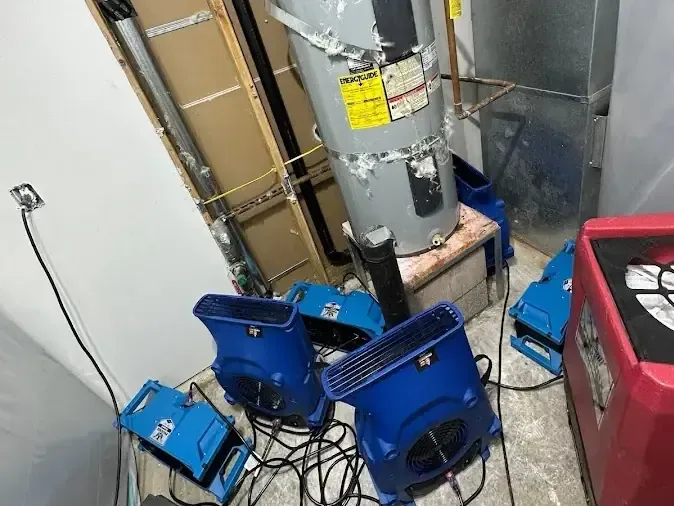
Drying structure and floors
A burst pipe soaks walls from the inside out. Surface fans alone will not dry framing or the back of cabinets.
The drying team places air movers, dehumidifiers and sometimes drying panels, and takes readings every visit. The work for burst pipe water damage ends when the readings match dry reference materials.
Hardwood and engineered floors need quick attention, and with homes valued near $819,100 on average, protecting them often pays off, and hardwood floor water damage is a common reason to start drying early.
If the burst was in a wall, small inspection holes let the team see the cavity and dry it directly.
Talking with the insurer
Reach the insurer early. Ask what is covered, what the deductible is and whether the policy requires approved vendors.
Do not throw out damaged items until the adjuster has seen them or photos are on file. A sudden burst is treated differently from a slow leak, so describe the event as it happened.
Keep the claim file in one folder, paper or digital, so that questions from the adjuster can be answered fast.
- Report the loss as soon as the house is safe.
- Ask whether emergency mitigation is covered and what limits apply.
- Keep a log of every call.
- Ask the adjuster what documentation is needed.
Common claim mistakes
Owners sometimes throw away damaged items before photographing them, or sign a repair contract before the insurer has reviewed the damage.
Another mistake is waiting too long. Insurers often expect prompt notice and reasonable steps to limit damage.
Before it happens again
A few steps reduce the odds of another burst.
- Replace old braided supply hoses on sinks, toilets and washers.
- Learn the shutoff location for the house and each fixture.
- Check exposed pipes in garages and crawl spaces for corrosion.
- Consider a leak detector or an automatic shutoff valve.
Questions
What do I do first when a pipe bursts?
Close the main water shutoff, open a low faucet to drain the pipes, and make sure the area is safe from electrical danger.
Will insurance cover a burst pipe?
Many policies cover a sudden burst, but terms differ. Contact the insurer and read the policy for exclusions and deductibles.
Should I wait for the adjuster before cleanup?
Take photos first and ask the insurer. Emergency mitigation to stop damage is usually expected, while repairs wait for approval.
How fast should drying start?
As soon as the leak is stopped and standing water is removed. Delay lets water spread into walls and floors.
Can wet hardwood be saved?
Often yes if drying starts quickly. Waiting allows cupping and buckling, which are harder to reverse.
Is a burst pipe the same as a slow leak for insurance?
Often not. Policies commonly treat sudden bursts differently from slow, hidden leaks, so the claim should describe how the loss happened.