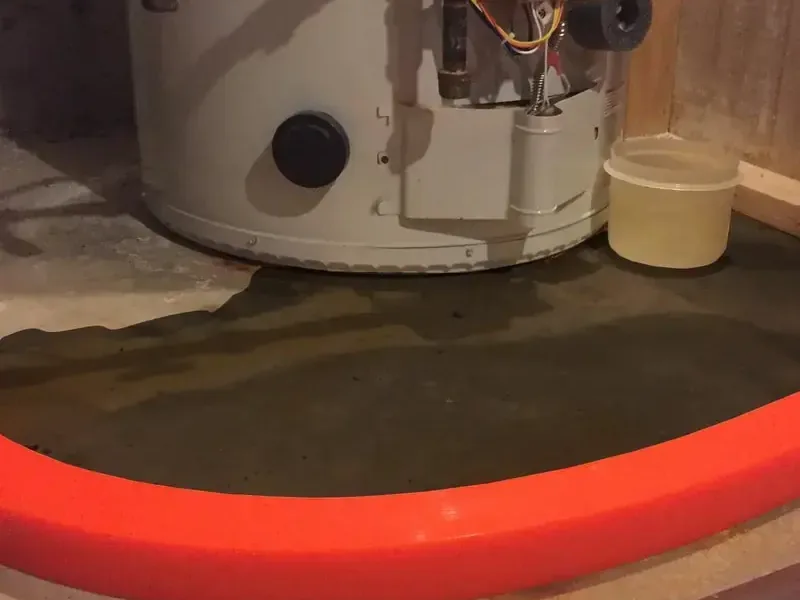
A water heater holds a full tank of water, and when it fails the whole tank can reach the floor. In a household of three or four, the unit also works hard every day, so a leak may start small.
Key takeaways
- Cold water shutoff on the heater is the first step, and power or gas off is the second.
- A failed tank can soak a closet, garage or utility room and run into nearby rooms.
- Extraction removes the standing water, and drying treats walls, flooring and framing.
- Santa Paula averages 3.24 persons per household, so tanks are used heavily.
- No local permit rules are claimed here; the city or the plumber can say what applies to a replacement.
Why heaters fail
Water heaters wear out. Sediment builds in the tank, parts corrode, and fittings and valves loosen with age.
A slow drip from a valve or a fitting is common. A tank that has rusted through is harder to stop and releases much more water.
Santa Paula is the geographical center of Ventura County, and a typical household here runs the heater daily for showers, dishes and laundry.
- A leaking relief valve.
- A corroded tank bottom.
- A loose or worn supply connection.
- A failed drain valve.
- A faulty pressure or expansion issue.
- Condensation from a heater in a cool space.
Warning signs before a tank fails
Many heaters give hints before a major leak. Rust colored water, popping noises and moisture at the base are all signs to watch.
A damp spot near the bottom, even a small one, deserves a call to a plumber before it grows.
- Rust stains on the tank or pipes.
- Puddles or drips at the base.
- Rumbling or popping from the tank.
- Hot water that runs out faster than usual.
The first steps when a heater leaks
Speed helps, but safety comes first.
If the leak is a steady spray or a gush, the cold water supply to the house should be closed at the main as well.
- Turn off the power at the breaker for an electric heater, or set a gas heater to pilot or off.
- Close the cold water supply valve on top of the heater.
- Do not touch wet wiring or outlets near the water.
- Open a hot water tap to relieve pressure if the tank is draining.
- Photograph the leak and the wet area.
- Call a plumber and a restoration team.
Where the water goes
Location decides the damage. A closet heater sends water into wall framing and carpet.
A garage heater spreads across the slab and into stored boxes.
With a laundry room or utility room, water can reach flooring, cabinets and the base of walls before anyone notices.
Water that reaches the garage door seam can run out to the driveway, but most of it will stay in the structure.
Water in a garage may also reach a nearby door into the house, so check the threshold and the floor just inside it.
Closet or hallway units
These push water through baseboards and under floors. Look for swollen trim and damp carpet nearby.
Garage or utility room units
Water spreads along the lowest point of the floor. Stored items on the floor wick moisture fast.
Extraction comes first
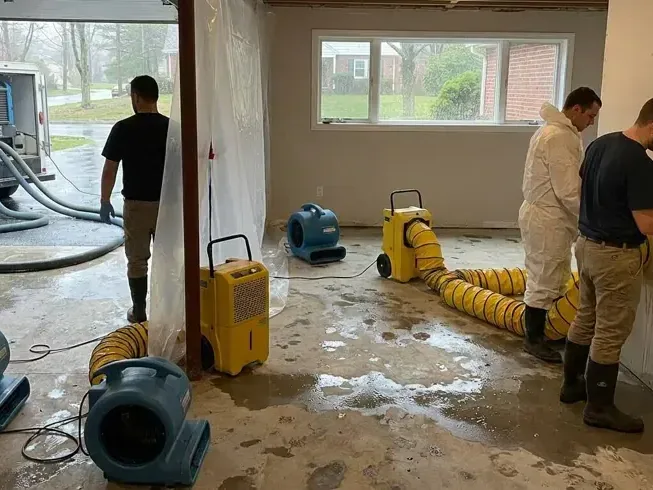
The crew starts with pumps and wet vacuums to take out standing water. Water extraction removes the bulk of the water so that drying equipment can do its work.
Then carpet pad, cardboard and wet insulation that cannot dry in place are removed. The crew documents this with photos for the claim.
The crew checks the wall behind and beside the unit, since water often runs down framing out of sight.
What gets removed
Carpet pad, cardboard boxes and baseboards that soaked up water are usually removed. Hard flooring can sometimes be dried in place.
The aim is to take out only what cannot dry, which saves both money and time.
Drying the area
Drying a water heater leak is a water heater leak cleanup job with a clear goal. Walls, floor and any nearby cabinet bases must reach normal moisture levels through structural drying.
The team places air movers and dehumidifiers and checks readings. If the water went into a wall, small openings may be cut to reach the wet cavity.
Finishing too early leaves damp materials, which can warp, stain and smell.
Heaters that sit on a platform or inside a closet frame need the cavity under and around them dried as well.
Walls, trim and cabinets
Water travels behind baseboards and into wall cavities. The crew may remove baseboard and drill small holes to let air into the cavity.
Cabinet bases near the heater often take on water too. Their kick plates come off to dry the space behind them.
- Baseboards lifted for airflow.
- Small holes drilled to check wall cavities.
- Cabinet kick plates removed.
Replacing or repairing the heater
A leaking tank is normally replaced, not patched. A leaking valve or fitting can sometimes be repaired.
Ask a plumber what a replacement involves. Rules about permits or pans are not claimed here, and the city building office or the plumber can say what applies.
A new heater should be installed only after the area is dry, so the new unit does not sit in damp materials.
- Choose a heater sized for the household.
- Add a drain pan with a drain to a safe spot.
- Install a leak sensor next to the unit.
- Flush the tank on the maker schedule.
Records and insurance
A sudden failure is often covered under a homeowners policy, but the heater itself may not be.
Keep photos, the plumber invoice and any equipment tags. These help show what failed and when.
Keep the heater manual or model tag and the plumber receipt; they show the age of the unit and what failed.
Rental homes and shared spaces
In rentals or shared utility rooms, the landlord usually owns the heater, but the tenant owns belongings in the room.
Report the leak in writing and keep photos. Move belongings out of the wet area when it is safe.
Questions
Should I shut off the power or the water first?
Both are needed. Shut off power or gas to the heater, and close the cold water valve. If the area is wet, stay clear of electrical parts.
How much water can a tank hold?
Tanks hold dozens of gallons, enough to soak a closet or garage. The exact size depends on the model.
Can a water heater leak be repaired?
Sometimes. A valve or fitting can be repaired, but a tank that has corroded through is usually replaced.
Does a drain pan stop all damage?
No. A pan catches small leaks and drips, but a failed tank can overflow it.
Will drying save my flooring?
Often, if extraction and drying start quickly. Delays raise the odds of warping and replacement.
Who handles the heater in a rental?
Usually the landlord owns the heater and handles repair or replacement, while the tenant covers personal belongings. The lease explains the details.