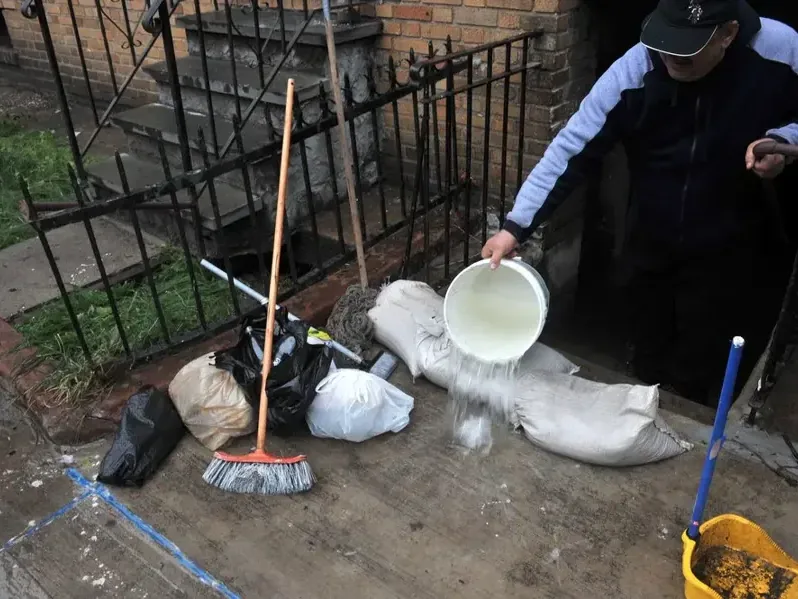
Creek water that enters a house is a different problem from a leaking roof or a split pipe. Santa Paula Creek showed how fast a channel can change during a storm, and homes near it can see the effects well past the bank.
Key takeaways
- Creek and storm runoff is outside water, so it carries silt and contaminants that a pipe leak does not.
- The early 2023 storms damaged ten of the 24 spur dikes along Santa Paula Creek and red tagged one residential structure.
- Flooring, drywall and insulation that sat in outside water usually need removal, not just drying.
- Photos taken before any cleanup begins support the insurance claim and the disaster declaration paperwork.
- Water that stays in walls and subfloors keeps causing damage after the storm ends, so extraction and drying start early.
What the 2023 storms showed along the creek
Santa Paula Creek is one of the creeks named in the channel repair project that followed the storms, along with Mud Creek Canyon, Magnolia Drive Creek and the Santa Clara River. The city sits on the north bank of the river, in the orchards of the Santa Clara River Valley, and heavy rain moves a lot of water through those channels.
Early in 2023, storms caused major damage, flooding and erosion along the creek. Ten of the 24 spur dikes installed in 2007 were damaged, and the west bank eroded badly.
One residential structure was red tagged.
Storms in 2024 changed the channel again. A Major Disaster was declared on January 15 and April 3, 2023.
For a homeowner, the point is simple. A creek that moves its banks in one winter can send water in a new direction the next, and past experience does not always predict the next storm.
The project area sat east of State Route 150, from near Mupu Elementary to near Birch Street and Magnolia Drive, which shows how many neighborhoods a single creek can touch.
- The channel is not fixed in place: erosion and new storms can move it.
- Damage from a creek storm is often uneven, so one house is hit while its neighbor stays dry.
- Repair work along the creek was planned around Mud Creek Canyon, Magnolia Drive Creek and the Santa Clara River.
Why creek water is not the same as a leak
A supply pipe leak delivers clean water. Creek water arrives with mud, plant debris and whatever it picked up on the way, which makes it contaminated from the first minute.
That changes the plan. Materials that soak up contaminated water are usually removed rather than saved, because drying them does not make them clean.
Clean, gray and black water in one flood
Creek floods are normally treated as the most contaminated category. The water category check helps a reader see how a spill is rated.
What gets removed first
Carpet, pad, loose insulation and the lower part of wet drywall come out early. This stops the water from wicking higher and cuts the odor that follows.
- Wet carpet and pad
- Baseboards and the bottom of drywall
- Insulation that has soaked up water
- Wet cabinet kick plates
The first hours inside the house
Safety comes before everything else. Water that reached outlets or a panel can energize a room, and a flooded floor can hide damage.
Once the area is safe, the next move is to stop adding water and start taking it out. A crew handling flood damage cleanup pumps or extracts standing water first, then sets up drying.
If the wiring is in doubt, an electrician should check it before power comes back on. Wet outlets and switch boxes can fail later, even after the surface looks dry.
- Turn off power to flooded rooms at the panel only if the panel itself is dry and safe to reach.
- Take photos and video before moving anything.
- Lift furniture legs onto blocks or move items out of the wet zone.
- Open doors and windows only if outdoor air is dry.
- Keep children and pets out of the affected area.
Drying walls, floors and subfloors
After extraction, moisture remains in framing, subfloors and the back of drywall. Surface dryness can hide that.
The drying team places air movers and dehumidifiers and checks readings until the building materials return to normal levels. This is the stage where structural drying matters most.
Skipping it invites swollen trim, warped floors and the musty smell that signals more trouble inside the wall.
A crew uses moisture meters, thermal cameras and probes to map where water went, because creek water often travels behind baseboards and under floors where no one can see it.
Drying goals are set per material. Wood framing, concrete and drywall dry at different speeds, so the plan adjusts as readings change.

Storm water versus creek flooding
Not every storm leak is a creek flood. Rain through a roof, a clogged gutter or a flooded yard are all storm water damage, but each has a different path into the building.
Creek flooding is the heaviest case. It brings in the most water, the most silt and the most contamination, so it carries the biggest cleanup.
- Roof and gutter leaks usually start at the ceiling or upper walls.
- Yard flooding usually enters at doors, garage thresholds or low vents.
- Creek flooding fills the lowest rooms first and leaves mud lines on walls.
Records after a declared disaster
When a Major Disaster is declared, as it was twice in 2023, claims and assistance paperwork follow. Records of the damage help every step.
Keep a log of what was removed, what was dried and what was thrown away. Receipts for emergency work belong in the same folder.
- Photos of every room before cleanup
- A list of damaged belongings with rough values
- Notes on dates and who did the work
- Copies of any notices from the city or county
Mud, silt and the cleanup that follows
Creek floods leave a layer of fine silt on floors and in corners. It is abrasive and holds moisture, so it is removed before final drying.
Crews shovel and wet vacuum the heavy material first, then wash and disinfect hard surfaces. Fabric, books and stored boxes that sat in the water are usually not worth saving.
Vehicles, sheds and detached garages often take the first hit. A garage that flooded may also hold stored paints, fuels or cleaners, which should be handled with care and not poured into drains.
- Silt dries into a crust that hides damp material underneath.
- Stored cardboard boxes wick water and fall apart quickly.
- Appliances that sat in water should be checked before use.
- Yard soil washed against the foundation can keep walls damp for weeks.
Questions
Can creek water damage a house far from the creek?
Yes. During heavy storms water can spread across yards and streets, and low rooms or garages can fill even when the house is not at the bank. Check floors and the lowest rooms first.
Does homeowners insurance cover creek flooding?
Standard homeowners policies often exclude flood, so many owners need a separate flood policy. The policy documents or the agent will say what applies to a given property.
Should wet drywall be saved after creek water?
The lower part is normally cut out because outside water carries contaminants. Drywall above the water mark can often be dried if it is firm and clean.
How long does drying take after a flood?
It depends on how much water entered and what the materials are. The drying team takes moisture readings and keeps equipment running until the readings are normal.
What should be done before the cleanup crew arrives?
Make the area safe, take photos, move small items out of the water and shut off power to wet rooms if it is safe. Avoid walking through standing water when outlets may be live.
What if the creek floods again the next season?
Repeat flooding is a reason to improve drainage, protect low rooms and keep storm supplies ready. A restoration team can also point out the weak spots it sees while drying.