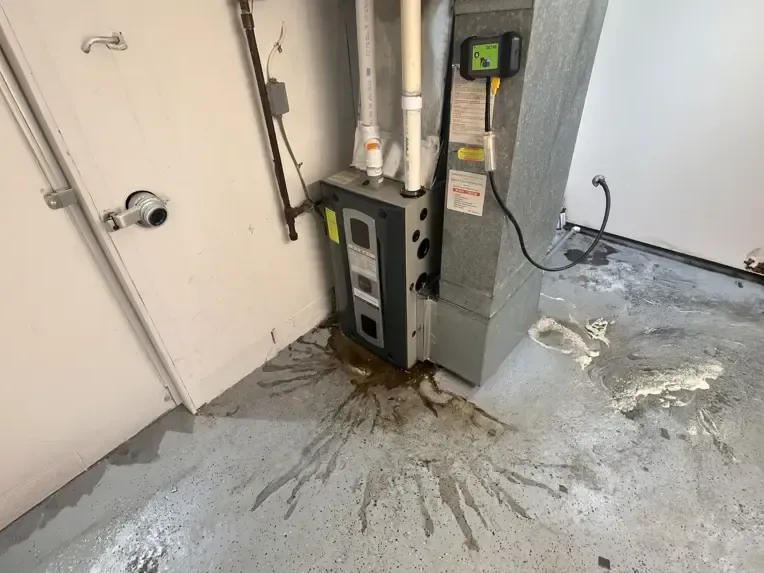
Piru has a hot-summer Mediterranean climate, so air conditioners run hard for much of the year. A clogged condensate drain can turn that cooling into a wet ceiling.
Key takeaways
- Piru has hot, dry summers, and an air conditioner removes water from the air while it cools, so the condensate has to go somewhere.
- When the condensate drain clogs, water backs into the drain pan and spills into a ceiling, closet or floor.
- About half of occupied Piru homes are rented, with 50.9% rented in 2020, so tenants and landlords both have a role.
- Turn the unit off at the thermostat and the breaker at the first sign of dripping.
- Ceiling materials that stay wet sag and stain, so extraction and drying should start quickly.
Why air conditioners leak
An air conditioner cools air by pulling heat and moisture out of it. The moisture collects as condensate in a pan under the coil and drains away through a small pipe.
In a hot summer, the unit makes a lot of condensate. When the pipe clogs with algae, dust or sludge, the pan fills and overflows.
Here the cooling season is long, so a unit that works well in spring can fail in midsummer when it runs all day.
- A clogged condensate drain pipe.
- A cracked or rusted drain pan.
- A dirty air filter that freezes the coil, then thaws and drips.
- Low refrigerant that causes the coil to ice up.
- A pipe that has lost its slope or has come loose.
- A failed float switch that was meant to shut the unit off.
Why summer makes it worse
Long hot days mean the unit runs for hours and makes steady condensate. A drain that handled spring weather can clog under that load.
Dust from dry summer air also feeds the buildup in the pan and drain pipe, so filters and drains need more care when the weather is hot.
- Run times are longest from midsummer on.
- Dust and algae collect in the pan.
- A clog that starts small can overflow in a day.
How a leak shows up in a Piru home
In houses with an air handler in an attic or closet, the first sign is often a brown ceiling stain below it. In others, a wet closet floor or a drip from a vent gives it away.
Water moves along framing, so the stain can appear a long way from the unit. Treat any new ceiling stain in a cooling season as a possible AC leak, whether the unit sits here or in a Santa Paula home.
A leak that runs only while the air conditioner runs is easy to miss, since the water stops when the unit cycles off and the stain looks old.
Signs in the ceiling
A sagging patch, a bubble in paint or a soft spot to the touch all mean water is trapped above. Do not poke a hole unless a safe way to catch the water is ready.
Signs in the closet or hall
A damp carpet edge, a musty smell near the air handler or a pan with standing water points to a drain problem.
What a tenant should do first
A renter is not expected to repair an air conditioner, but quick action keeps the damage small.
Keep the unit off until a technician has cleared the drain. A unit that runs with a full pan only adds to the loss.
- Turn the air conditioner off at the thermostat and the breaker.
- Place buckets and towels under drips and move belongings out of the way.
- Photograph the stain, the unit and any standing water.
- Tell the landlord or property manager in writing, with the photos.
- Keep copies of messages and a list of damaged items.
What to put in the message to the landlord
A short, dated note is enough. Give the room, the stain or leak, the time it was first seen and the steps already taken.
Attach photos and ask when a technician can come. Keep the reply.
- The unit and room where it was seen
- What was seen and when
- Photos attached
- A request for a technician and a restoration team
What a landlord should do
Because about half of occupied Piru homes are rented, landlords often manage this kind of loss. In 2010, 57.7% were owner-occupied, and by 2020 the split was 49.1% owner-occupied and 50.9% rented.
A landlord is best served by acting quickly. AC leak water damage left alone can spread into drywall and insulation and become a bigger claim.
Written notice protects both sides. A landlord who has a dated message knows when the problem began, and a tenant has proof of reporting it.
- Send an air conditioning technician to clear the drain and test the float switch.
- Call a restoration team to extract water and dry the ceiling.
- Notify the insurer and keep every invoice.
- Tell the tenant what is being done and when.
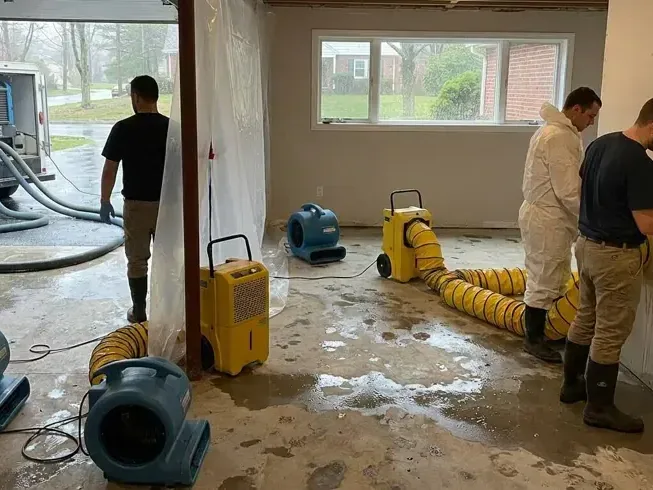
Drying a wet ceiling
Ceilings are drywall over insulation, and insulation holds water like a sponge. Wet drywall sags and can fall.
The team opens the ceiling where needed, removes wet insulation, and dries the framing. A repair of ceiling leak water damage comes after the readings show the area is dry.
Hot, dry summer air can speed drying, but a closed attic and a hidden pocket of water will not dry on their own.
If the ceiling is bulging, a small hole made with care can relieve trapped water into a bucket, but only if no wiring or lights are near it.
Insulation and attic spaces
Wet insulation loses its value and holds water against the ceiling. It is usually removed and replaced rather than dried.
If the attic is hot, water may evaporate and hide a leak. The stain on the ceiling below is often the only sign.
Simple habits that prevent leaks
Most AC leaks are avoidable with a little care before and during the cooling season.
Moisture in an attic can also travel along rafters. A technician can check that insulation around the air handler is dry.
- Change the air filter on the schedule the maker gives.
- Have the drain pipe flushed before summer.
- Check that the pan is dry and not rusted.
- Install a float switch or a drain pan alarm if none is present.
- Look at the ceiling below the air handler every month in summer.
When the leak is in an older building
Piru has a small historic downtown, with buildings from the late 1880s and 1890s, and homes of many ages. Older buildings may have air handlers added later in odd places, such as closets and attics.
The local restoration team can explain the plan. The age of the structure does not change the cause, but it can change the repair.
Plaster ceilings, for example, need slower drying than modern drywall.
Questions
Can an air conditioner leak cause big damage?
Yes. A clogged drain can send gallons into a ceiling over days. The longer it runs, the more drywall, insulation and flooring get wet.
Who pays when a rental AC leaks?
That depends on the lease, the policy and the cause. Tenants should notify the landlord at once, and landlords should tell their insurer.
Is condensate water clean?
It is not drinking water. It can carry algae and dust from the coil and pan, so wet materials are dried promptly and sometimes removed.
Should I turn off the AC when it drips?
Yes. Turn it off at the thermostat and the breaker. Running it adds more water and can damage the unit.
How is a wet ceiling dried?
The team extracts water, removes wet insulation, opens the ceiling if needed and runs fans and dehumidifiers until readings are dry.
Will the lease cover a ceiling repair from an AC leak?
That depends on the lease and the cause. Most leases make the landlord responsible for the building and the cooling equipment, while tenants cover their own belongings.