Santa Paula downtown is centered on Main Street, where some of the oldest buildings in the city stand. A leak in an older shop or office raises its own questions about drying and downtime.
Key takeaways
- The older downtown around Main Street has the oldest buildings and homes in the city.
- Business owners should record stock, equipment and fixtures with photos before cleanup begins.
- Older walls, floors and ceilings need controlled drying that reaches the framing.
- Neighbors share walls in a downtown, so a leak in one unit can reach the next.
- A clear plan to keep the shop open or reopen it quickly protects income as well as the building.
A downtown with history
Santa Paula is known as the Citrus Capital of the World, with groves of orange, lemon and avocado around it. Union Oil Company of California was founded in the city in 1890, and its old building now houses the California Oil Museum.
Main Street anchors the downtown and has the oldest homes in the city, from bungalows and cottages to Victorian-style and craftsman houses.
That age shapes how a building reacts to water. Older materials and layouts can hide moisture and dry unevenly.
A leak in one of these buildings can affect the shop, the stockroom and an apartment above in the same event.
How water enters a downtown business
The causes are the same as in a house, but the stakes are higher because a business loses sales while closed.
Because many downtown buildings share walls, a leak in one unit can reach the next before either owner sees it.
- A burst or leaking supply pipe in a wall
- A drain or sewer backup in a restroom or kitchen
- A roof leak after heavy rain
- A leaking water heater or water line to an ice maker
- Water coming through a shared wall from a neighbor
- Fire sprinkler or fixture failure
Protecting stock and records first
The first minutes should go to people and valuables. Once safe, move or cover what can be saved.
Insurers ask for a clear picture of what was lost, so photographs of shelves, counters and equipment help.
Food and perishables that touched dirty water should be thrown away, with photos taken first for the claim.
Move or elevate
Lift boxes off the floor onto shelves or racks. Cover inventory with plastic if water is dripping from above.
Record the loss
Photograph stock, equipment, fixtures and ceilings before changes. Keep purchase records and make a list with values.
- Inventory lists
- Equipment serial numbers
- Invoices and receipts
- Dated photos or video
Ceilings and upper floors
Many downtown buildings have apartments or offices above shops. A leak from above shows up as a stain or drip in the shop below.
Check ceiling tiles, light fixtures and vents for water. Turn off power to any fixture that is wet.
- Do not stand under bulging ceiling tiles.
- Catch drips with buckets.
- Protect counters and registers with plastic.
Extraction and drying in older construction
The first step is extraction, which removes standing water from floors and carpet, much like water extraction in a home. A crew handling commercial water damage sets priorities by how fast the business can reopen.
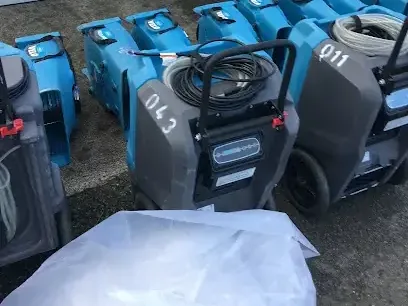
Then comes the slower stage. Structural drying removes moisture from walls, floors and ceilings with air movers and dehumidifiers.
Older walls may be plaster over lath, thick masonry or layered finishes. These dry slowly and need patient monitoring.
Floors in an older shop may be wood, tile or layers of old coverings, and each needs a different drying approach.
Bathrooms, kitchens and sewage
Restaurants and cafes can face sewage backups from grease or a blocked drain. Sewage is the most contaminated kind of water and needs sanitary cleanup and, in food areas, careful clearance before reopening.
Never use a kitchen that took sewage until it is cleaned and checked.
- Stop using sinks and toilets.
- Keep staff and customers out of the area.
- Photograph, then call for cleanup.

Keeping the doors open
Not every loss closes a business. Often only one room or part of a floor needs work.
A good plan splits the space into zones, so the dry areas can stay in use while the wet areas are dried. The crew can also work early or late to keep disruption low.
Ask the crew for a written plan and a schedule so staff know which areas are safe to use each day.
- Agree on a work schedule that fits business hours.
- Seal off wet areas with plastic sheeting.
- Set equipment where customers will not trip on cords.
- Post a sign explaining that part of the space is under repair.
Matching drying to the building
Brick, plaster, wood framing and concrete hold water differently. A single plan for all of them does not work.
The crew often sets different equipment in different rooms and monitors each material with its own readings.
- Plaster and lath dry slowly.
- Wood framing responds well to steady airflow.
- Masonry can hold water for a long time.
Neighbors, landlords and tenants
In a downtown, many businesses rent. Leases decide who handles the building and who handles contents.
Read the lease and tell the landlord at once. Water that crosses a shared wall may mean more than one policy is involved, so keep records of every step.
Neighbors also benefit from fast action. A fast response keeps a leak from spreading next door.
A shared wall also means shared notice. Tell the neighbor about the leak early so they can check their side.
Customers and staff
Staff safety comes first. Wet floors are a slip risk, and equipment cords are a trip risk.
Post clear signs, keep aisles open and tell staff where to avoid.
Prepare before a loss
A few habits make a future loss smaller.
A small kit with flashlights, plastic sheeting, towels and gloves kept near the stockroom can save a lot of stock in the first minutes of a leak.
- Know where each shutoff is, inside and outside.
- Keep a list of emergency contacts on site.
- Back up records off site.
- Store valuables above floor level.
- Photograph the space once a year.
Questions
How long does it take to dry an older commercial building?
It depends on the materials and how much water entered. Readings steer the work, and thick masonry or plaster can take longer.
Can a shop stay open during drying?
Often yes in part. The crew can zone the space and work around business hours, though noise from equipment is likely.
What should a business owner photograph?
Stock, equipment, fixtures, ceilings, floors and the source of the leak, before anything is moved or thrown away.
Who is responsible for the building, the owner or the tenant?
The lease decides. Tenants usually insure contents and the landlord insures the structure, but terms differ.
Does water from a neighbor still count as a claim?
It can. Keep records, tell your insurer and the landlord, and ask who handles the repair.
Do older buildings need special drying?
Often yes. Plaster, old wood and masonry dry slowly and unevenly, so the crew monitors them more closely and may extend the drying time.